📨 Issue #4 — "Braver Than You Sound"
Sunday, June 14, 2026 • Theme: COURAGE • From the archive of The Mir's free weekly email, complete and unabridged.
🌅 The Opening Thought
Dear friend — this week's letter is about courage, and we should say up front that we mean the ordinary kind. The movies have given courage a costume: it rides in at a gallop, it has a sword and a speech and very good lighting. But most of the courage that actually holds the world together would never make it into a trailer. It looks like making the phone call you've been dreading. Saying "I was wrong" out loud, to the person's face. Going back to the doctor. Asking for help. Sitting down, again, at the thing that defeated you yesterday.
Here's what the costume version gets wrong: it implies brave people aren't afraid. Every honest brave person will tell you the opposite. The fear comes standard; it's factory equipment. Courage isn't the missing fear — it's the small hinge decision, made while fully afraid, to move anyway. Which means the trembling in your hands before the hard conversation isn't proof you lack courage. It's proof you're about to use some.
And notice this, because it's the most encouraging fact we know about bravery: it's a muscle, not an inheritance. Nobody is issued a fixed ration at birth. The person who does one small frightening thing on Tuesday finds Thursday's frightening thing measurably smaller. Every fear surmounted — even a tiny one, even badly — leaves you slightly braver than it found you. The compounding is quiet, but it is real, and it works in your favor for life.
The story below is about the bravest man we ever heard of. He is eighty years old, he has never once raised his voice, and his entire arsenal is a chair, a newspaper, and the sentence "Mind if I sit here?" We suspect that by the end you'll agree he outranks the fellow with the sword.
💬 Three Good Quotes
📖 One Small Story: Walter of the Waiting Room
The surgical waiting area at St. Anne's opens at 5:30 in the morning, and for eleven years, so has Walter. He's a retired shop teacher, eighty years old, with a volunteer badge gone cloudy from washing and a cardigan the color of weak tea. His official duty is to hand out visitor stickers. His actual work is something else entirely.
Walter has a gift: he can spot the frightened ones. Not the ones crying — those have usually found their people. He watches for the still ones. The man turning his phone over and over without looking at it. The woman who has read the same laminated parking notice four times. The teenager whose mother is in room 6 and whose father is pacing the corridor, leaving the kid alone with a fear too big for his body. Walter drifts over with his newspaper and asks the question he has asked maybe ten thousand times: "Mind if I sit here?"
Nobody minds. And then Walter does his strange, magnificent thing: he doesn't reassure anybody. No "I'm sure it'll be fine" — Walter says he retired that sentence years ago because it isn't his to promise. Instead he asks about the person in surgery. What's her name? What's she like? Is it true she once drove to Memphis overnight just for a concert? And for twenty minutes, the frightened one gets to talk about the person they love as a whole living story instead of a name on a whiteboard. The fear doesn't leave, exactly. It scoots over. It makes room.
A nurse named Priya once asked Walter how he kept doing it — eleven years of other people's worst mornings, before dawn, unpaid. Walter thought about it and said: "My wife had three surgeries at the end. Every time, some stranger sat with me, or nobody did. I'm just evening up the ledger." Then he added, quieter: "And every morning, walking in here, I'm scared too. Hospitals scare me to death. That's how I know which chairs to sit in."
That's the whole secret, we think, and it's why Walter belongs in a letter about courage: the bravest man at St. Anne's is afraid of hospitals. He just decided, eleven years ago, that his fear could ride along while he worked. It never got a vote on the schedule.
🕯 The Candle Corner
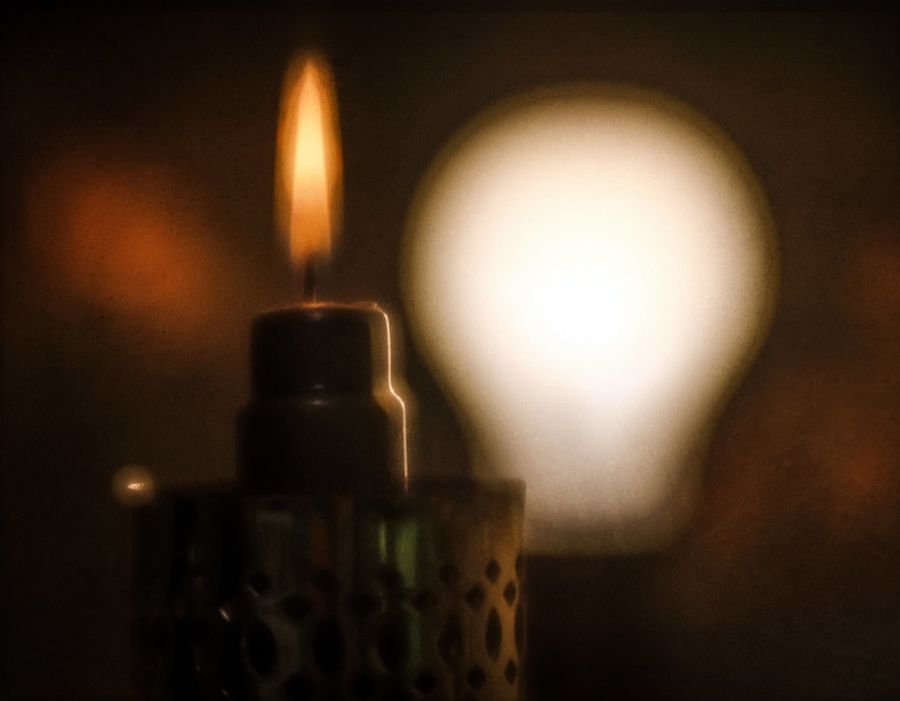
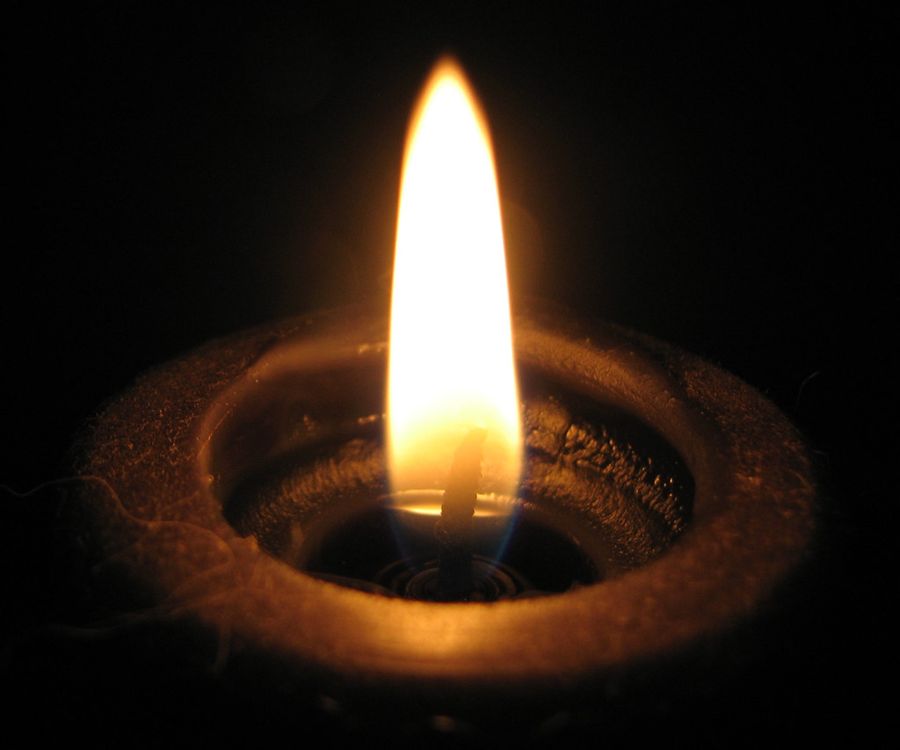
Watch a candle in a dark room and you're watching a small act of nerve: one flame, entirely outnumbered by the dark, holding its ground anyway. It doesn't fight the darkness. It just refuses to go along with it. That's courage at candle scale — and it's very close to courage at human scale, too.
This week, before your one brave thing (practice below), light a candle and let it burn while you do it — through the phone call, beside the half-written letter, on the desk while you rehearse the hard sentence. Let it be your steady witness: still lit, still here, carry on. A tall candle suits the job — something with hours in it, like our Serenity Pillar, which was poured to keep long, calm vigils. But any flame that holds its ground will hold yours.
🌱 This Week's Practice: One Small Brave Thing
Not ten. Not a new fearless life by Friday. One.
- Name it honestly. You already know what it is — it's the thing that flinched in you while reading this issue. The call, the apology, the appointment, the ask. Write it down in five words or fewer.
- Shrink it to one step. Not "resolve everything with my brother" — just "dial the number." Courage only ever has to be one step long; the second step is always easier, once you're moving.
- Schedule it like a dentist appointment. Day, time, written on the calendar. Fear thrives on "someday"; it does poorly against "Tuesday, 4 p.m."
- Let the fear come along. Don't wait to feel ready — Walter's been scared for eleven straight years. Trembling hands can still dial. That's the whole trick.
- Afterward, mark it. Tell one person, or write one line: "Today I did the thing." Bravery compounds fastest when it's witnessed — even if the only witness is your own notebook.
One small brave thing before next Sunday. By our math, that's fifty-two a year — and a person who does fifty-two brave things a year is not, by any definition we accept, a timid person.
Bravely (and a little nervously) yours,
— The Mir
« Previous: Issue #3 — Rest & Stillness | Issue Archive | Next: Issue #5 — Kindness »