📖 Small Stories, Kept On Purpose
Around here we collect small stories the way some people collect stamps or seashells — carefully, gratefully, and with the firm belief that the little ones matter most. Not the front-page stuff. The other kind: the crossing guard, the second candle, the porch light, the borrowed book. Moments so ordinary you could walk right past them, except that somebody didn't. We keep them because on a hard Tuesday, a small true story does more good than a big abstract idea ever could. Here are seven of ours. Pour something warm, take your time, and if one of them reminds you of a story of your own — well, we'll get to that at the bottom of the page. 🕯
🍎 The Crossing Guard Who Knew Everyone's Name

Every school morning for nineteen years, Mr. Aldo stood at the corner of Chestnut and Third in a yellow vest two sizes too big, holding a stop sign that had faded from red to a sort of tired pink. He was there in sleet. He was there in that awful week in February when the wind came sideways. He was there so reliably that parents set their watches by him, which is a thing people still said in his neighborhood.
What made Mr. Aldo different was not the vest or the punctuality. It was that he knew every single child's name. Not most of them — all of them. Kindergartners he'd met in September, eighth graders he'd been greeting since they were in strollers, the shy new girl who'd moved from two states away and hadn't told anyone at school that she was lonely.
"Morning, Delia. Morning, Marcus — good luck on that spelling test. Morning, Sam, tell your grandmother I said hello."
Nobody asked him to do this. It wasn't in the job description, which mostly concerned traffic. But somewhere in his first autumn on the corner, Mr. Aldo had noticed something: a child who is greeted by name walks differently. The shoulders come up. The steps get surer. For some kids, he realized, his corner might be the first place all morning where anybody said their name out loud like it was good news.
So he made it his work. He kept a little spiral notebook — kids' names, siblings' names, the occasional dog. He studied it at the kitchen table like a man preparing for an exam that never ended and that he never wanted to end.
When Mr. Aldo finally retired, the school held an assembly. He expected a coffee mug. Instead, six hundred children stood up, one row at a time, and each row called out together: "Morning, Mr. Aldo!" — six hundred kids saying his name back to him, the way he'd said theirs, one crossing at a time, for nineteen years.
He kept the notebook. Last anyone heard, he still reads it sometimes.
Takeaway: saying someone's name out loud is the smallest possible way of saying "you matter" — and it works every single time.
🕯 Two Candles at Table Nine
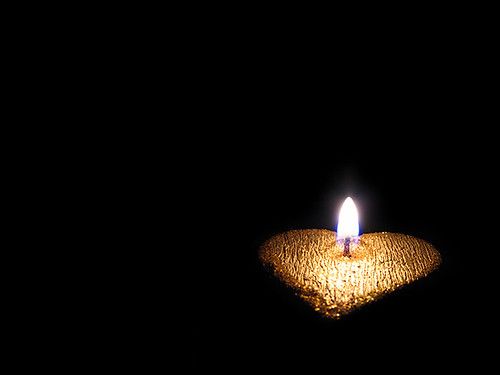
Every Friday evening at six o'clock, Walter came to the little Italian place on Route 9 and sat at table nine, the one by the window. He ordered the same thing — chicken piccata, glass of red — and before the food arrived, he would take two small candles out of his coat pocket, set them on the table, and light them both.
He and Rosa had done it that way for fifty-one years. Two candles, one table, every Friday. She'd started it back when they were broke newlyweds who couldn't afford much of a night out; the candles, she said, made any table fancy. After she passed, Walter kept coming. Kept the reservation. Kept lighting both.
The waitstaff mostly left him to it, in the kind way that restaurant people learn. But there was a new waitress that spring, a college kid named Dana, and on her first Friday she nearly asked him if someone else was coming. Her manager caught her elbow. "Table nine's a party of two," he said quietly. "Always has been."
Dana thought about that all week. She thought about it while she studied, while she rode the bus, while she watched her own grandfather eat dinner alone in front of the television.
The next Friday, when Walter's plate came out, there was something new on it: two forks, crossed neatly at the edge, the way you'd set them for a shared dessert. Walter looked up. Dana just said, "In case she wants a bite," and moved on to table seven like it was nothing.
Walter told that story to everybody for the rest of his life — his kids, his barber, the man at the hardware store. Not the story of his grief, which he mostly kept private, but the story of the forks. "Fifty cents of stainless steel," he'd say, shaking his head. "And it was the kindest thing anyone ever did for me."
Dana graduated, moved away, waited tables somewhere else. She probably doesn't know that at the little Italian place on Route 9, to this day, when a regular comes in alone wearing a wedding ring and a certain look, the plate goes out with two forks.
Takeaway: you don't have to fix someone's grief — you just have to show them you see who they're missing.
💡 The Street Where the Lights Came On
Marisol's building was the kind of place where people nodded in the stairwell but didn't know each other's names. Twelve units, twelve doors, twelve separate lives stacked politely on top of one another. When her husband started working nights at the hospital, Marisol found she couldn't sleep until she heard his key at 3 a.m. — so she started leaving the porch light on for him. One small bulb over one door, burning into the dark.
She didn't think anyone noticed. Someone did.
Mrs. Okafor in 2B, whose son drove a delivery truck overnight, saw that light from her window and understood it immediately, the way you understand a language you didn't know you spoke. The next week, her porch light was on too.
Then the man in 3A, whose daughter waited tables until close. Then the couple in 1C, who didn't have anyone coming home late at all but who had figured out what was happening and wanted in. By the end of that winter, all twelve lights burned every night — a whole building quietly keeping watch for people most of them had never met.
The strange part — the good strange part — was what happened next. You can't keep a light on for someone's son without eventually asking how the son is doing. The stairwell nods turned into stairwell conversations. Somebody organized a coffee thing in the lobby. When the elevator broke, three neighbors carried Mrs. Okafor's groceries up two flights without being asked, because by then she wasn't "2B." She was Grace.
Marisol's husband eventually rotated back to day shifts. She kept the light on anyway. When a new tenant moved into 4D and shyly asked the super why the whole building glowed at night like a docked ship, he thought about it for a second and gave the only accurate answer:
"Somebody here loves somebody who comes home late," he said. "That's all it takes."
Takeaway: one small faithful light gives everyone around it permission to shine theirs.
📚 The Book That Came Back After Forty Years
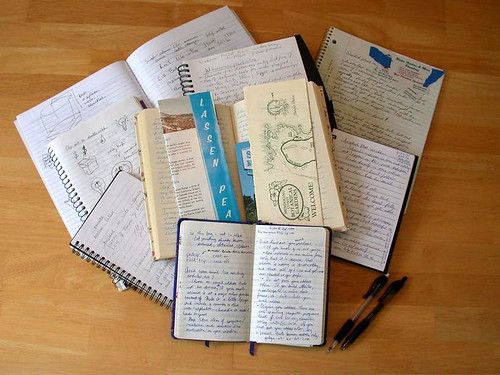
The package arrived at the Harmon Public Library on an ordinary Thursday: brown paper, careful string, no return address. Inside was a copy of The Collected Poems of Robert Frost, due back — according to the card in the pocket — in October of 1984. There was a twenty-dollar bill paper-clipped to the flyleaf and a note that said only: "Sorry. It became a member of the family. Please forgive both of us."
The head librarian, a practical woman named Ruth, waived fines on principle and was ready to shelve it. Then she opened it.
Every margin was full. Forty years of pencil, pen, and one regrettable stretch of purple marker. Next to "The Road Not Taken": "Read at Dad's funeral. He'd have argued with it." Next to "Birches": "Katie learned to climb the maple today." Dates. Question marks. A grocery list, once. An argument with Frost himself that ran three pages and appeared, in the end, to conclude in Frost's favor.
It was against every library rule ever written, and it was the most alive book Ruth had ever held. A whole life had happened in those margins — babies, funerals, an anniversary, at least one long winter that the handwriting got shaky in the middle of and steadier at the end of.
Ruth couldn't shelve it and couldn't discard it, so she did something else. She put it in a glass case by the front desk with a small sign: "Returned after 40 years. Worth the wait. Open to a different page each week."
People started coming in just to see which page it was. High schoolers who'd never read a poem on purpose stood there reading a stranger's grief and joy in the margins of "Stopping by Woods." An older man was seen at the case for a long time one afternoon, not reading, just resting his hand on the glass.
Nobody ever found out who sent it. Ruth stopped trying. "Whoever you are," she wrote in the library newsletter, "you didn't return a book late. You returned it finished."
Takeaway: a life leaves marks in the margins — and someday those marks will be exactly what a stranger needs to read.
📞 The Wrong Number That Rang for Ten Years
In the spring of 2013, a retired schoolteacher named Eleanor dialed her sister in Ohio and got a man named Ray in Nebraska instead. One digit off. It happens a hundred thousand times a day, and it almost always ends the same way: "Sorry, wrong number," click, forgotten.
But Ray had just come in from checking on his cattle and was in no hurry, and Eleanor was the kind of person who apologized in complete paragraphs, and somewhere in her apology she mentioned she was calling to wish her sister a happy birthday, and Ray said, well, tell her happy birthday from Nebraska too. And Eleanor laughed — really laughed, she said later, for the first time since her husband's funeral that winter — and they talked for ten more minutes about nothing: weather, cattle, her sister's terrible taste in birthday cakes.
Before hanging up, Ray said the thing that changed it from an anecdote into a friendship: "You can dial this wrong number anytime, ma'am."
She did. The next Sunday, and the Sunday after that. It became the standing joke and then the standing appointment: every Sunday around four, Eleanor "misdialed" Nebraska. They talked about his late wife and her late husband, about her students who still wrote to her, about his granddaughter's softball season, which he reported on with the gravity of a major-league broadcaster. Neither of them ever visited the other. Somehow that was part of it — a friendship with no errands in it, no obligations, nothing but the talking.
When Eleanor's health began to fail, her daughter found out about Ray the way children find out about most things: by picking up the phone at the wrong moment. She was baffled, then suspicious, then — after listening for two minutes — quiet. Afterward she asked her mother who that was. Eleanor considered the question seriously.
"That's Ray," she said. "I dialed him by accident ten years ago, and we've been getting it wrong ever since."
At Eleanor's memorial, among the flowers, there was an arrangement with a card postmarked Nebraska. It said: "For my favorite wrong number. Sundays won't be the same. — R."
Takeaway: some of the best things in a life arrive misdialed — the trick is staying on the line an extra minute.
❄️ The Driveway on Linden Street

The snow started Thursday night and didn't quit until it had buried Linden Street under fourteen inches — the good kind of snow, the school-canceling kind, and by 9 a.m. Friday every kid on the block was outside. Sleds. Snowballs. The beginnings of an ambitious and structurally doubtful fort.
Tommy Reyes, age ten, was hauling his sled past number 44 when he saw Mr. Whitfield on his front step, looking at his driveway. Mr. Whitfield was old in the way that seemed permanent to a ten-year-old, and he was holding a snow shovel the way you hold something you already know you can't use. His wife had an appointment Monday, one of the important kinds, and fourteen inches stood between his car and the road.
Tommy didn't organize anything. That's the part worth getting right. He just put down his sled and started shoveling, because the driveway was there and so was he. But a kid shoveling alone on a snow day is a mystery, and mysteries draw a crowd. Within ten minutes his best friend had wandered over to ask what he was doing, stayed to argue about his technique, and picked up the garage's other shovel. Then the twins from number 47. Then a girl nobody knew well who turned out to own the best shovel on the street and a work ethic that shamed them all.
By ten-thirty there were eleven kids on that driveway. Somebody's mother brought out cocoa in a mismatched armada of mugs. Mr. Whitfield came out twice to protest and twice was ignored, and the second time he stopped protesting and just stood there with his hand over his mouth.
The driveway took forty minutes. Then — and this is the detail the neighborhood still tells — nobody went home. Eleven kids with shovels and momentum simply moved to the next driveway that needed them, and the one after that. Linden Street got dug out end to end by lunchtime, oldest houses first, and the fort got built in the afternoon anyway, bigger than planned, because by then there were eleven architects.
Years later, at his high school graduation party, someone asked Tommy about it. He looked genuinely confused about why it was a story. "The driveway was there," he said. "So were we."
Takeaway: kindness rarely needs a committee — it needs one person to put down the sled first.
⭐ The Night Nurse and the Paper Stars
The hardest hours on the fourth floor were between two and four in the morning. Every nurse knew it. The visitors were gone, the hallways went quiet, and the patients who couldn't sleep were left alone with the ceiling and their thoughts — and on a hospital ward, at 3 a.m., thoughts are rarely kind.
Nadia had worked nights on the fourth floor for six years. She was efficient, unsentimental, and known for her handwriting, which was the only legible handwriting in the building. She was not, she would have told you firmly, the crafty type.
But she had a habit. During her 2 a.m. rounds, while she checked lines and charts, she folded paper stars — little puffed origami stars, the kind you make from a strip of paper in about a minute. She'd learned it from her grandmother and did it the way other people hum: without thinking. And when she left a room, she'd leave one on the bedside table. No note. No explanation. Just a small star that hadn't been there when the patient closed their eyes.
She never mentioned it, and for years nobody mentioned it to her. But the fourth floor knew. Patients woke to find them and kept them lined up on the windowsill like a tally of nights survived. A man recovering from a long surgery had eleven. He counted them every morning, he told his daughter, "to prove somebody came by while I was at my worst, and thought I was worth a minute."
That was the thing Nadia had understood without ever saying it: the stars weren't decorations. They were evidence. Evidence that the darkest hour of the night had a witness in it. That someone had stood by the bed at 3 a.m. — the hour of ceilings and thoughts — and left proof.
When Nadia retired, the floor staff planned a small party. They needn't have bothered with decorations. Word had gotten out over the years, the way these things do, and former patients had been mailing things in for weeks. On her last night, Nadia stepped into the break room and stopped in the doorway. Strung across the ceiling, corner to corner, were hundreds of paper stars — hers, saved and sent back, some faded, some worn smooth from being carried in pockets.
Six years of 3 a.m., hanging overhead, all of it kept.
Takeaway: the smallest proof that someone was there — a star, a note, a minute — can be the thing a person survives the night by.
💌 Now It's Your Turn
Every one of these stories started the same way: somebody noticed something small and thought, I should tell someone about that. So — do you have one? The neighbor, the teacher, the stranger at the bus stop, the thing your grandmother always did? We would sincerely love to read it, and with your permission, we may share it in a future issue of the weekly email (first names only, always). Send it to us through our Contact page — long or short, polished or not. Around here, the small ones matter most.
Thank you for reading with us today. May your week have at least one story worth telling. 🕯